Iran has faced water scarcity concerns due to prolonged drought and resource mismanagement. Above-average rainfall in 2026 may provide some temporary relief, but challenges such as continued rising temperatures, chronic overuse, high agricultural demand, limited energy supplies, and economic strain could continue to place pressure on the people of Iran.
Water Supply
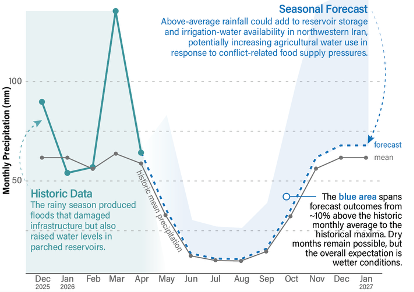
Iran’s water crisis has been developing over many years of drought and overuse. Although the 2025-26 wet season brought above-average rainfall and flooding, depleted water reserves remain a major concern, particularly around the city of Tehran.
Eastern Iran also continues to face shortages in reservoirs where transboundary rivers flow in from Afghanistan. Increased rainfall may temporarily improve reserve levels, but continued water-saving measures will be necessary to prevent the crisis from worsening.
Food Security
Water shortages are closely linked to food security in Iran. Drought has reduced the production of wheat, and disruptions to imports have added to existing pressures. Because of this, the nation is currently experiencing an inflation of food costs.
Despite improved rainfall, food prices are expected to remain inflated in 2027. Limited access to water for agricultural efforts could make it difficult for farmers to quickly recover from the effects of previous drought conditions.
Energy Strain
Iran is also experiencing increased pressure on its energy system. Above-normal temperatures are expected throughout 2026, increasing demand for both water and energy.
At the same time, liquified natural gas supplies have been reduced, creating additional constraints. Energy limitations could disrupt irrigation during periods of peak demand and contribute to deeper economic difficulties, potentially further reducing living standards.
The Future in Iran
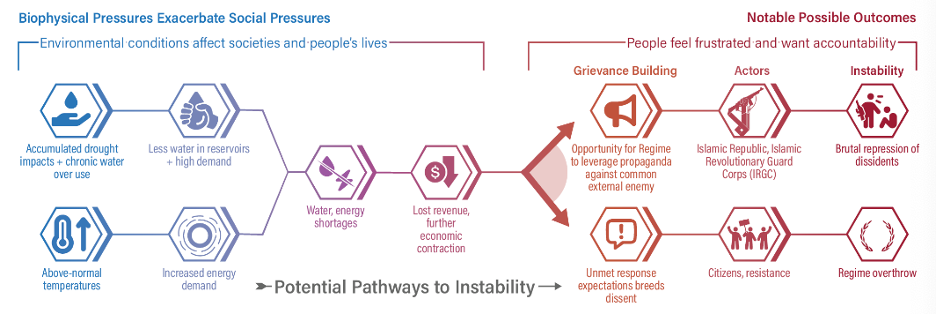
The combination of water shortages, energy constraints, and food insecurity could contribute to social instability in Iran. Although the exact outcome is uncertain, continued pressures from water shortages create a pathway to intensified social tensions in Iran. However, better outcomes are possible with appropriate interventions to improve conditions, so only time will tell what will happen in Iran.