
This information was compiled by GWSC Communications Intern Emily Wright, based on a GWSC product completed by Human-Environmental Scientist Penny Beames, Data Scientist Erin Menzies-Pluer, and Cartographer Zach Goodwin.
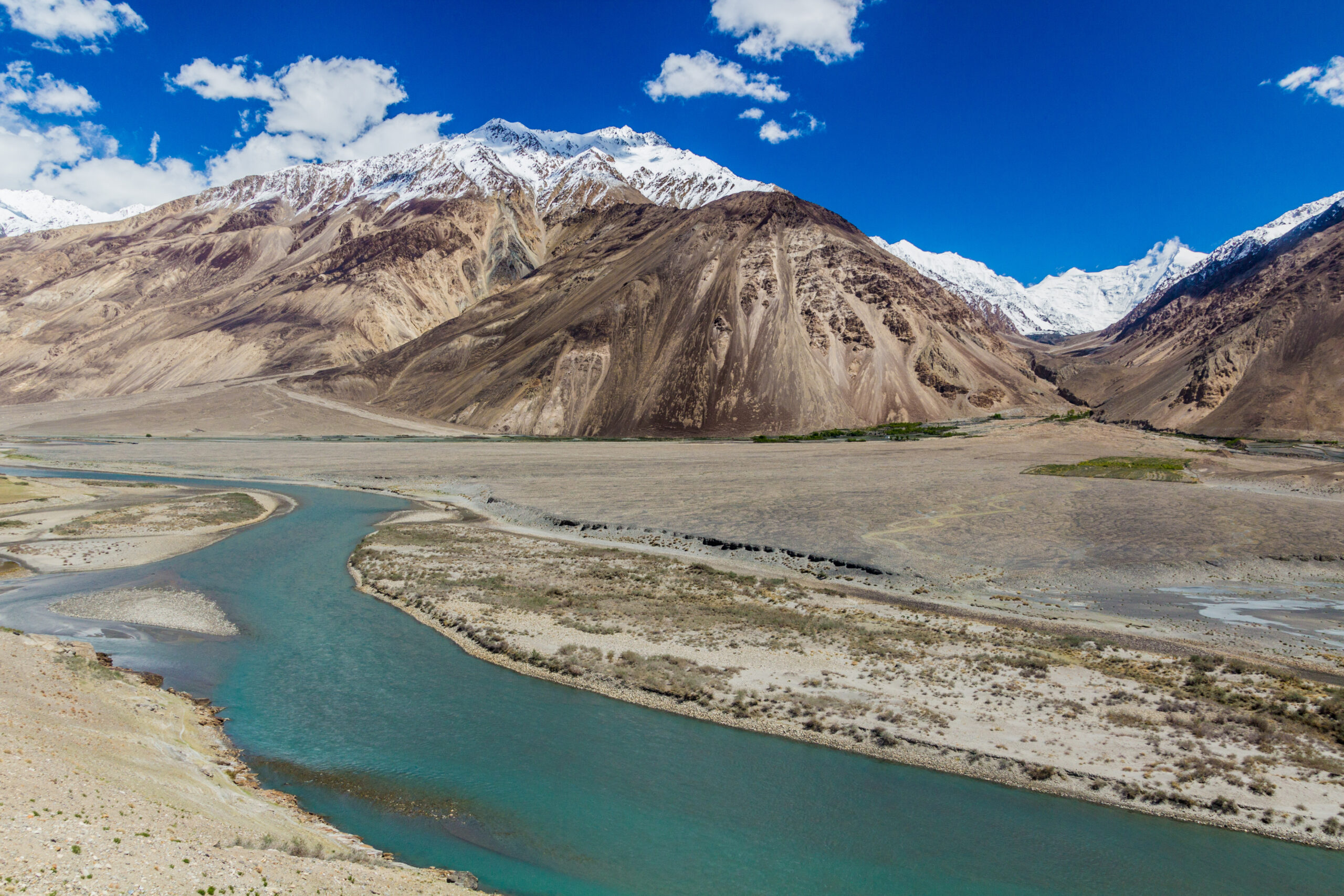
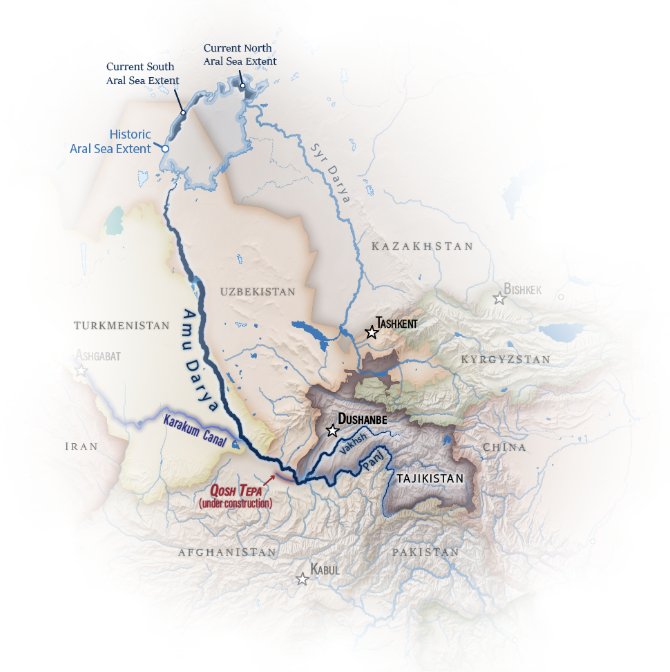
Millions of people in Central Asia rely on the Amu Darya River for drinking water, food production, and electricity. The nation of Tajikistan holds the headwaters of the river, supplying these critical resources to its downstream neighbors of Uzbekistan and Turkmenistan.
Peaceful relations among these neighboring countries plays a pivotal role in ensuring the well-being of the region’s citizens, regardless of nationality. Rising geopolitical tensions and threats of flood and drought make this task more complex. Tajikistan seeks to ensure its economic and political security while also serving the everyday water needs of its people.
Potential for Peace
In 2025, Tajikistan experienced one of its driest years in decades. However, a new cooperative approach has allowed Uzbekistan, Turkmenistan, and Tajikistan to reach an agreement centered on reserving water in the Nurek Dam for summer irrigation. Despite reduced water resources during the winter, the agreement has held. Tajikistan is projected to experience slightly above-average rainfall this summer, which may reduce anxieties over the Nurek Dam’s reserve levels.
For communities downstream that rely on irrigation for crops and income, these water reserves can determine whether families maintain stability or face economic hardship. While this cooperation provides hope for continuing positive relations, some long-term uncertainty remains. Afghanistan shares the Amu Darya basin but is not a part of the existing water-sharing agreements. As the country develops the Qosh Tepa canal, water may be siphoned from the river before reaching Turkmenistan and Uzbekistan. An agreement between all four nations could potentially stave off conflict or future river alterations.
Fights Over Flooding
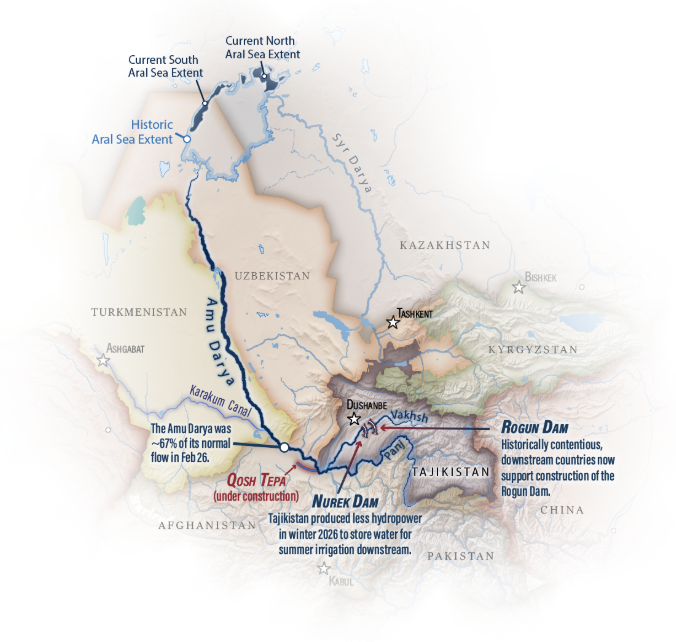
Chinese mines have altered the riverbanks that form the border between Tajikistan and Afghanistan, and increased flooding is projected to further disrupt water flows. Some Afghan militants perceive this as a theft of their water, and five Chinese miners were killed in November 2025 as revenge. China is Tajikistan’s largest foreign investor, and as such, the nations are working together to protect joint investments near the mines.
The collaboration has made locals suspicious that China is attempting to annex Tajikistan’s territory. Their fear stems from uncertain access to the water and land essential for sustaining families’ livelihoods. As floods become more frequent and foreign security becomes more involved, tensions between Afghanistan, China, and Tajikistan could worsen and raise broader geopolitical concerns.
Tensions and Temperatures
Tajikistan is projected to experience both heavy rain and hot, dry streaks around 2035. The government is ill-equipped to manage the floods, landslides, and food security issues that such weather shifts could bring. The Gorno-Badakhshan Autonomous Region, or GBAO, harbors residual anti-government sentiments from Tajikistan’s civil war almost three decades ago. These sentiments are exacerbated by inefficient disaster response capabilities and a strong military presence.
As unrest and discontent simmers in the GBAO, Islamic extremist groups such as ISIS-K and Jamaat Nasurallah may find recruits more easily. These groups often locate and enlist Tajik migrants in Russia who are fleeing unemployment and agricultural damage from floods and drought. The situation in Tajikistan serves as an example of how economic instability can leave the most vulnerable populations reaching for security and opportunity wherever they can find it.
Future Implications
Tajikistan’s recent water-sharing agreement demonstrates that collaboration with other nations is possible. Whether that cooperation can endure future changes in weather, geopolitical competition, and internal instability is yet to be seen. However, it is crucial to remember that Tajikistan’s concerns run even deeper than matters of diplomacy. The anxieties surrounding water security in the Amu Darya River region extend to the people who depend daily on its resources to sustain their crops, their livelihoods, and their families.
Since its inception, GWSC’s analysis team has completed more than 100 briefs. Examples of other recent nations and regions the team has analyzed include Iran, Venezuela, Mexico, Turkmenistan, Liberia, and many others. Find more information about GWSC’s work here.