This information was compiled by GWSC Communications Intern Emily Wright, based on a GWSC product completed by Human-Environmental Analyst Penny Beames, Lead Environmental Data Scientist Erin Menzies-Pluer, and Cartographer Emma Dyson.
Government corruption and mistrust in its neighbors affect the Kazakhstan population’s much-needed access to water for irrigation and domestic efforts.
Unrest After Theft
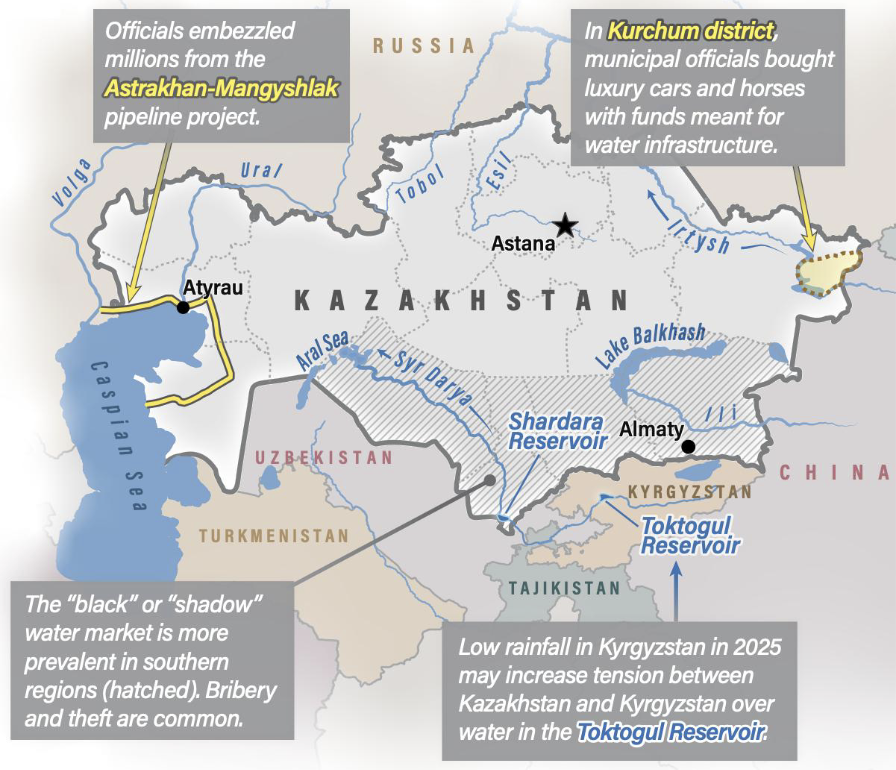
Farmers in Kazakhstan’s arid southern regions rely heavily on irrigation, but the local black water market is diverting and stealing the water intended for vital agricultural efforts. Theft, bribery, and corruption have cost these local farmers approximately $10B USD as of 2023.
Exceptionally dry periods increase tensions. When the black market and drought block access to water, farmers may perceive upstream or wealthier farms as having received unfair access to resources, creating tension throughout the region.
Scarcity After Corruption
Kazakhstan’s government has a history of corruption within its ranks. Kazakhstan’s people have expereinced embezzlement, fuel price hikes, and unauthorized spending at the hands of their officials.
The country experienced violent protests in 2022, and the scars of that deep unrest are still visible nationwide. When drought creates water scarcity and impacts the livelihoods of locals, those wounds can reopen and heighten sensitivity to government misconduct once again.
Tensions After Shortages
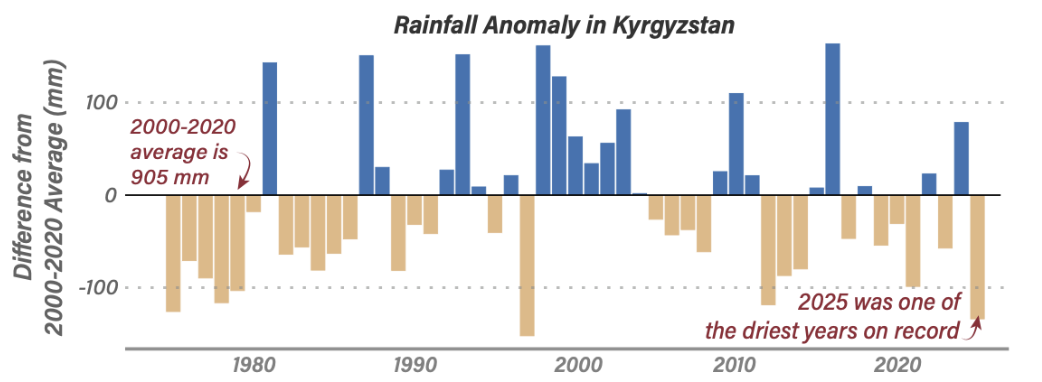
The nations of Kazakhstan and Kyrgyzstan have an agreement where Kyrgyzstan receives electricity in the winter in return for providing Kazakhstan with water in the summer. However, with 2025 as one of the driest years on record for Kyrgyzstan, the nation used water during the winter for hydropower efforts rather than reserving it for Kazakhstan in the summer.
Kyrgyzstan’s Toktogul reservoir and Kazakhstan’s Shardara reservoir are now at their lowest levels in decades. Such a low supply means that Kyrgyzstan may be unable to uphold their end of the agreement. Farmers are unhappy with the reduced amount of water available for irrigation, and international trust is being tested.
Kazakhstan After 2025
Water scarcity heightens tensions and makes corruption harder to tolerate. As the people of Kazakhstan feel their financial stability and their trust in their government and neighbors being shaken, unrest and tension can become larger-scale issues.
Since its inception, GWSC’s analysis team has completed more than 100 briefs. Examples of other recent nations and regions the team has analyzed include Iran, Venezuela, Mexico, Tajikistan, Liberia, and many others. Find more information about GWSC’s work here.