
This opinion article was written by Human-Environmental Analyst Penny Beames.
In early August, the lights went out in Cuba. Again.
Fuel shortages and crumbling infrastructure have left the country’s electricity grid vulnerable to collapse. The August blackout was Cuba’s sixth in 2026. Seventh, if you count how the grid collapsed again while workers were bringing it back online.
There is no question that Cuba is in a vulnerable spot. Which makes the looming El Niño all the more concerning.
Current Conditions in Cuba Could Make This Year’s El Niño Worse
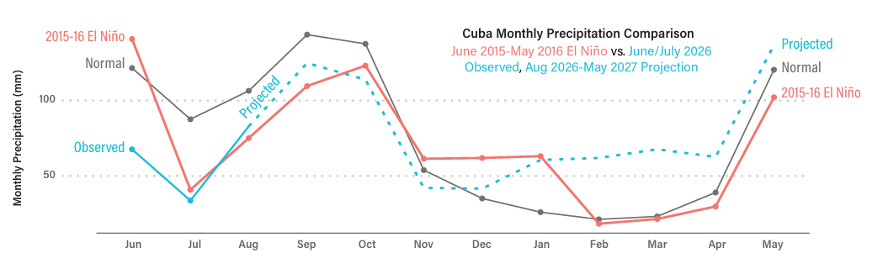
El Niño tends to “flip” Cuba’s weather patterns. The summer wet season, when Cuba grows much of its food crops, is drier, leaving reservoirs low and agricultural lands parched. The winter, which is typically dry, sees heavy rain that washes out tobacco and other cash crops.
The 2015-16 El Niño hit Cuba hard. The 2026-27 El Niño is shaping up to resemble that of 2015-16, only with a bit more punch. Drought is already worse, and the winter is forecast to be wetter.
And Cuba is in a worse position than it was a decade ago.
Though drought and flood are hazardous, the technology exists to blunt some of the impacts. What makes Cuba so vulnerable this time around is that they’re missing the fuel required to operate those technologies.
Drought-Driven Food Insecurity Likely to Hit Cubans Hard
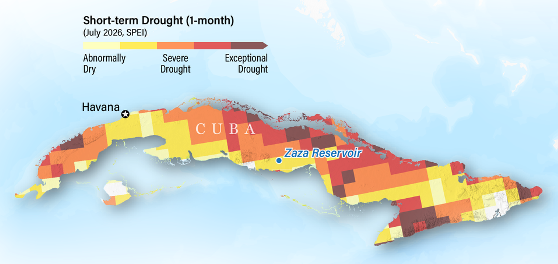
Cuba’s irrigation is split roughly half-and-half between surface water reservoirs and groundwater aquifers. Irrigation reservoirs and canals require electricity to pump water across the landscape, doling out relief in the midst of drought. Like 2015-16, those reservoirs are nearly empty. Unlike 2015-16, power cuts limit the ability to distribute any water that may be left.
In 2015-16, farmers supplemented dwindling surface water with pumped groundwater, and still rice production dropped by 33% that year. This time around, diesel shortages mean the pumps are quiet and the water stays below ground.
Cuba’s domestic food security situation has deteriorated in the intervening years. Domestic grain production has plummeted, so the country has had to adapt to more expensive imports for rice, its primary staple.
The trouble is, Cuba’s main rice import partners, Vietnam and Brazil, also get hit by El Niño drought, which could spike prices further and complicate deliveries.
Urban agriculture has become sophisticated to fill food security gaps left by embargoes and broken supply chains but still requires municipal water to “irrigate” when rain is sparse. Water gets cut off when power is only provided for a few hours at a time, so gardens suffer. Water tankers are on a much tighter schedule due to fuel shortages. Cubans may have to watch as excessive heat and lack of water wilt their home crops.
After Drought, Heavy Rains May Ruin Cuba’s Cash Crops
And then, as the heat fades, heavy rain may wash out the cash crops that prefer cooler winter temperatures.
Tobacco exports that fill national coffers are at risk. Floods like those that wrecked crops in January 2016 are forecast to last through April. Granted, forecasts lack skill this many months out, and the threat may ease as subsequent model runs hone in on winter rainfall patterns.
That said, this winter remains one to watch.
Resilience Can Help Cubans Face El Niño, but Systemic Challenges Remain
Cubans are resourceful. People are building renewable electricity solutions to shore up gaps in the grid, and they are undoubtedly relieving some of the strain. But solar panels are expensive and hard to deploy at scale, particularly in time to meet the challenge of an impending global weather phenomenon. And resilient people can only do so much with fragile systems.
The 2026-27 El Niño may look very similar to the 2015-16 El Niño, but Cuba has changed, and not for the better. Fuel shortages, crumbling infrastructure, and weather may create a compound crisis worse than anything Cuba has endured thus far.