
This information was compiled by GWSC Communications Intern Emily Wright, based on a GWSC product completed by Human-Environmental Analyst Penny Beames, Data Scientist Rachel Haggard, and Cartographers Nicholas Roberge and Emma Dyson.
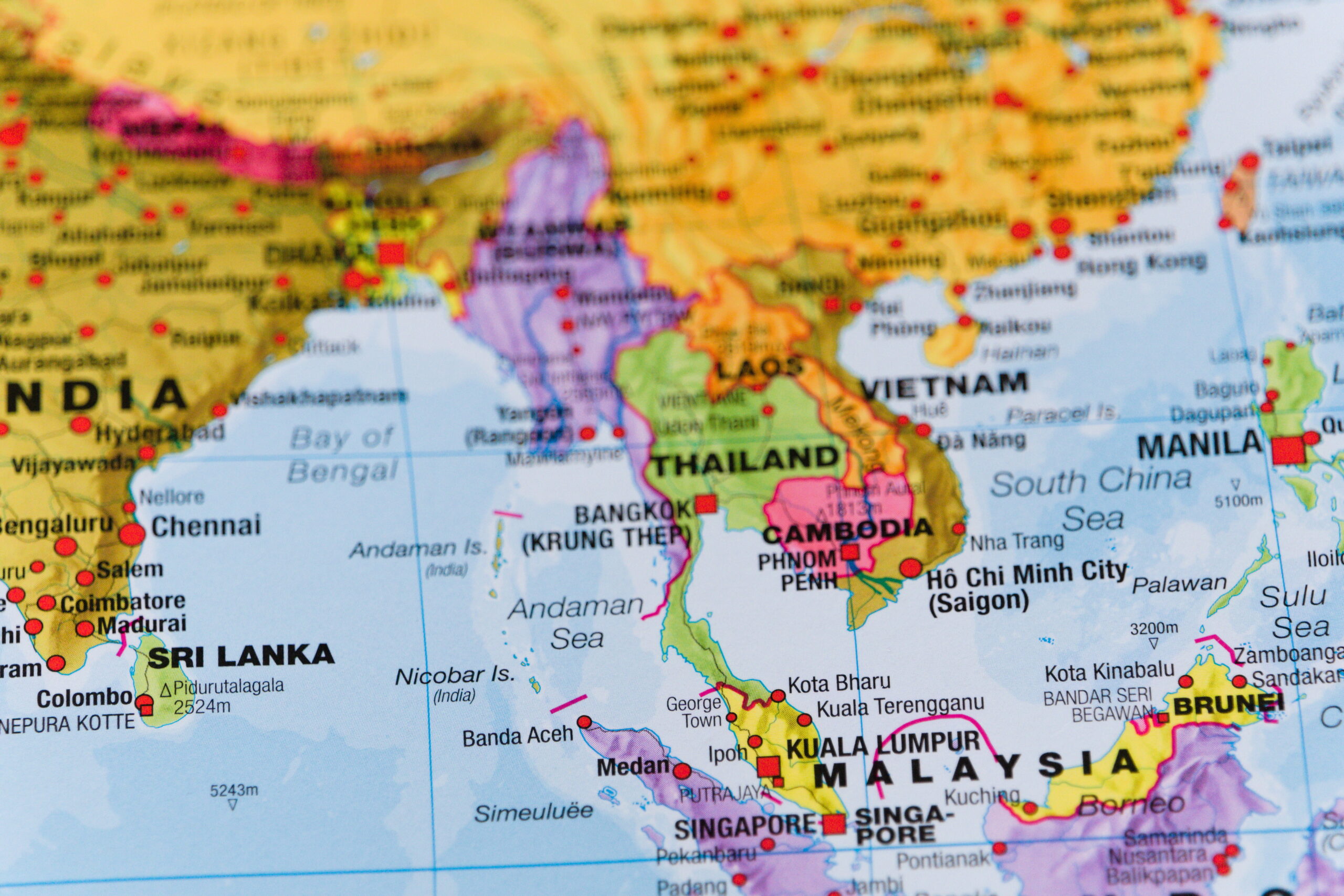
The 2026-2027 El Niño may cause water, fuel, and fertilizer shortages that significantly reduce Southeast Asia’s contributions to global supply chains. Regional scarcities threaten vital industrial and agricultural efforts, creating impacts that can be felt worldwide.
Background
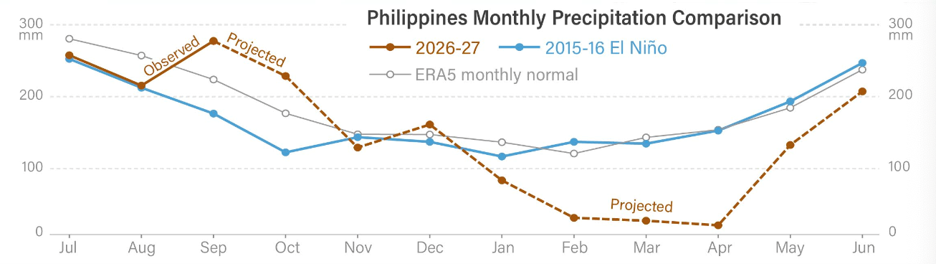
Southeast Asia is currently experiencing drought more intense than that of the 2015-16 El Niño. Additionally, rainfall is projected to be nearly absent from February to April 2027. This deficit would reduce hydropower reservoirs and parch agricultural fields.
Wildfires on Sumatra and Borneo rival the worst on record and threaten to flip into severe floods by 2027. The severe conditions across the region may exacerbate existing shortages and lower overall disaster resilience.

Industry
Shortages in hydropower and fuel may impact mining and manufacturing operations well into 2027. Drought affects Indonesia’s tin industry, which provides 20% of the world’s semiconductor solder. Water scarcity also reduces nickel and steel production in the Philippines and Indonesia and electronics manufacturing in Thailand and Vietnam.
Global electronics prices could see an increase of 5%. And locally, livelihoods throughout Southeast Asia could be greatly diminished, sparking a rise in piracy in the Malacca Strait and insurgent activity in the Philippines.
Agriculture
Farmers in Southeast Asia are struggling to purchase sufficient fertilizer and diesel to pump groundwater and maintain high crop yields. The region that produces 40% of global rice exports may lose 2% to 8% of production, which could combine with previous minor production drops to raise prices to their highest in 15 years.
Malaysia and Indonesia produce 90% of the world’s palm oil, which is used in half of all processed foods. Diesel costs and weather limits could reduce 2026 yields by 15% to 20%. These food impacts could contribute to a projected 15% increase in global food prices in 2027, echoing historical food price spikes that sparked the Arab Spring in 2011.
Looking Ahead
Drought in Southeast Asia is projected to persist into 2027, continuing to restrict critical resource extraction, manufacturing, and agricultural efforts. Here, drought in Southeast Asia is projected to persist into 2027, continuing to restrict critical resource extraction, manufacturing, and agricultural efforts. Here, both local livelihoods and global commodity chains are threatened by water insecurity.