
GWSC Human-Environmental Analysts Penny Beames, Dr. Penelope Mitchell, and Dr. Caily Schwartz represented the organization at the 4th Annual Environmental Peacebuilding Conference in Ottawa, Canada, this June.
The trio convened a session focused on how GWSC uses its Pathways to Instability Framework to help translate complex environmental and sociopolitical dynamics into clearer insights to support decision-makers and peacebuilders.
“Hearing from and learning alongside scholars and practitioners from around the world was both insightful and energizing. I left feeling motivated to continue strengthening how we communicate the links between environmental change and human security in support of GWSC’s work,” said Dr. Schwartz.
Dr. Penelope Mitchell wrote the following first-hand account of the GWSC team’s experience at the event.
Environmental peacebuilding brings together a wide range of issues at the intersection of environment, conflict, and peace to provide an overarching conceptual and operational framework to improve understanding and practice.
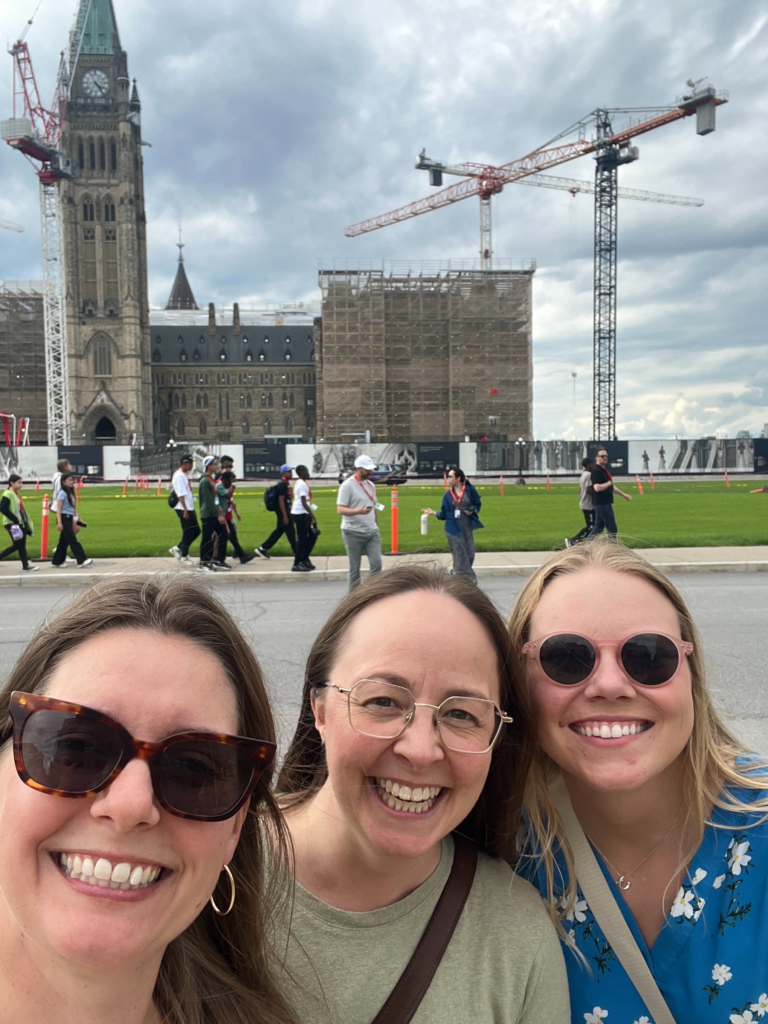
Our first in-person foray into the world of the Environmental Peacebuilding Association (EnPax) was both enriching and thought-provoking—there were really sad moments as we examined so much hardship around the world, but also inspiring moments as we heard from practitioners on the ground working to bring peace.
We found value in hearing about two sides of the same coin –conflict studies and humanitarian issues—two fields that are often treated as separate domains despite their deep interconnectedness. This intersection is central to the work of GWSC.
We continually seek to bridge the gap between biophysical and social systems, examining how environmental disruptions can create not only immediate humanitarian challenges but also the grievances and vulnerabilities that can contribute to conflict and instability.
The conference reinforced the importance of integrated approaches and diverse perspectives for developing a more complete understanding of these complex dynamics.
Thank you to the University of Ottawa for being such a great host. We also loved the opportunity to explore the beautiful city of Ottawa, share meals with friends old and new from across the conference community, and enjoy some local fare—of course, including poutine!