
This information was compiled by GWSC Communications Intern Emily Wright, based on a GWSC product completed by Human-Environmental Analyst Penny Beames, Lead Environmental Data Scientist Erin Menzies-Pluer, and Cartographer Zach Goodwin.
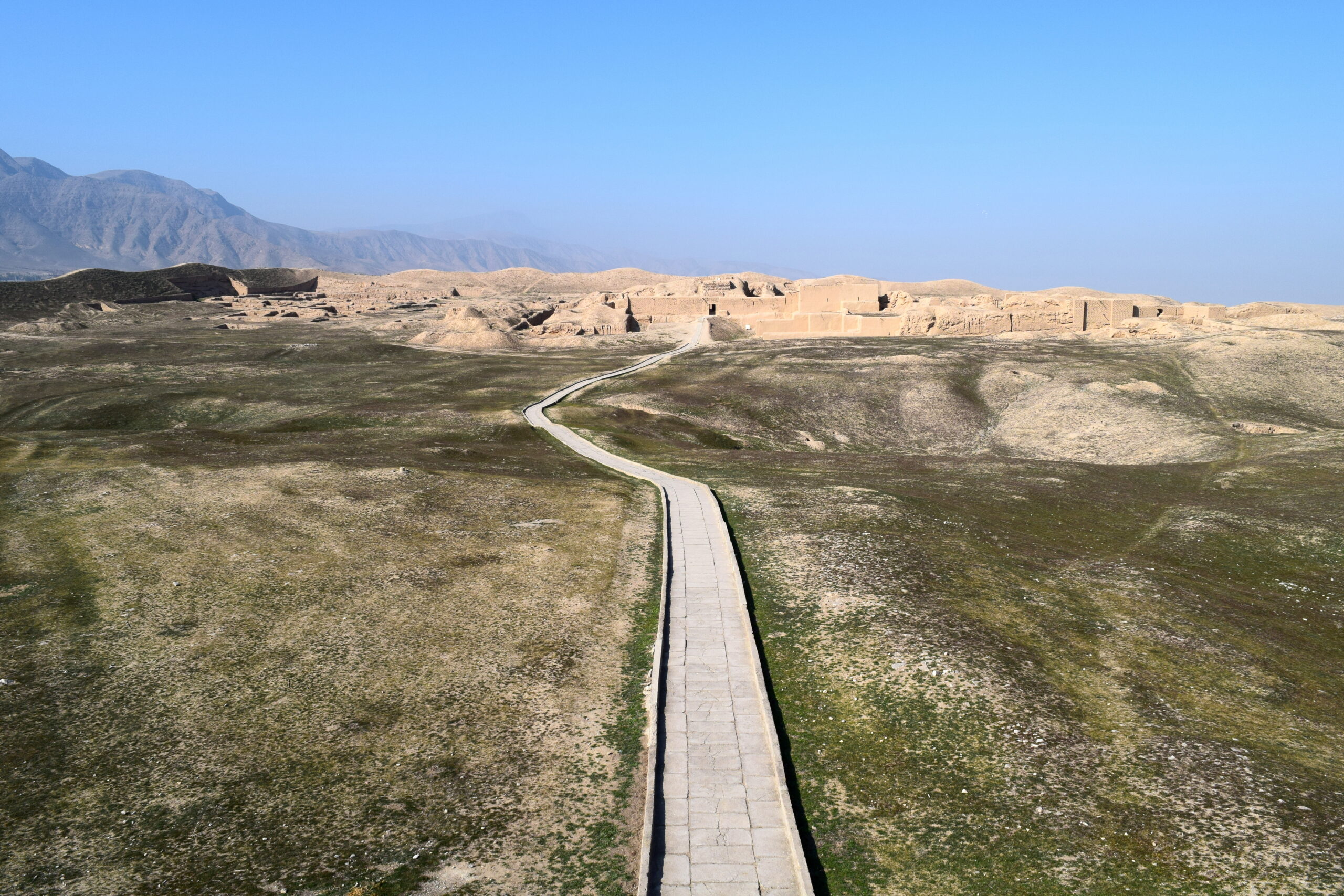
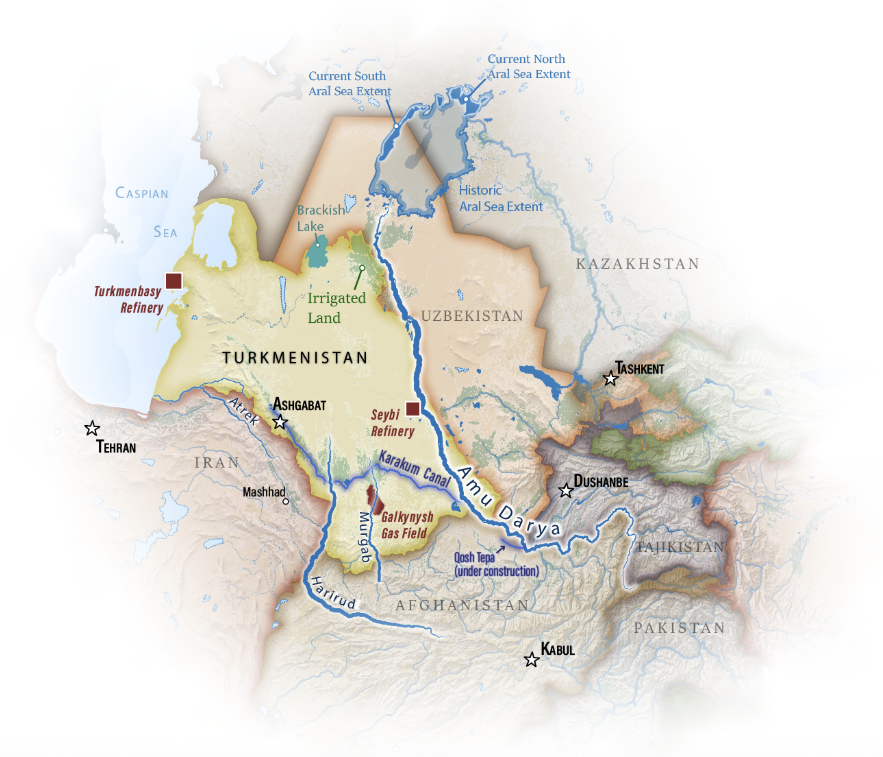
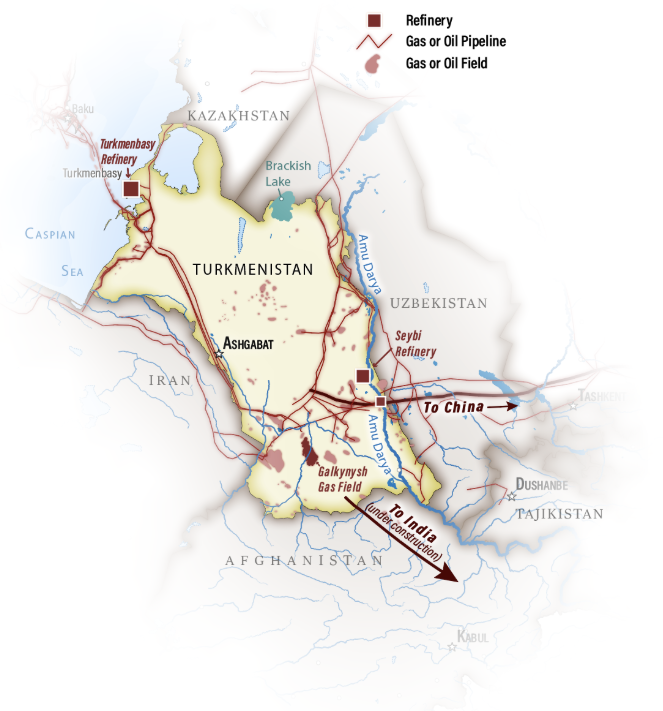
The desert nation of Turkmenistan receives almost all of its water from sources outside its borders. The Amu Darya River is especially key to supporting the country’s agriculture and oil and gas industries, as well as the millions of people working hard to survive in arid Central Asia.
Uncertainty surrounds Turkmenistan’s economic and agricultural resources. Without sure access to water, the nation’s industries suffer, bringing families financial insecurity.
In some cases, locals are forced to leave their homes in search of a place with a more stable economy and opportunities for reliable employment. The situation in Turkmenistan shines a spotlight on the often-overlooked ways in which water scarcity can negatively impact the daily lives of millions.
Water Scarcity from Drought and Overuse
As neighboring countries build new upstream dams and canals and as drought intensifies across Central Asia, Turkmenistan’s already fragile water supply becomes increasingly threatened.
Because the nation relies so heavily on transboundary rivers, the effects of drought on Afghanistan, Iran, and Tajikistan are felt by those in Turkmenistan as well. Afghanistan is working to build the Qosh Tepa Canal and several smaller dams, which could divert some essential resources from the Amu Darya River away from Turkmenistan.
Additionally, shared reserves in the Doosti and Nurek dams are running low. Back-to-back dry years are projected to increase in the next two decades, compounding existing supply issues. Without water, Turkmenistan’s irrigation and industrial processes may slow, creating financial uncertainty for local families.
Reduced Agricultural Yield
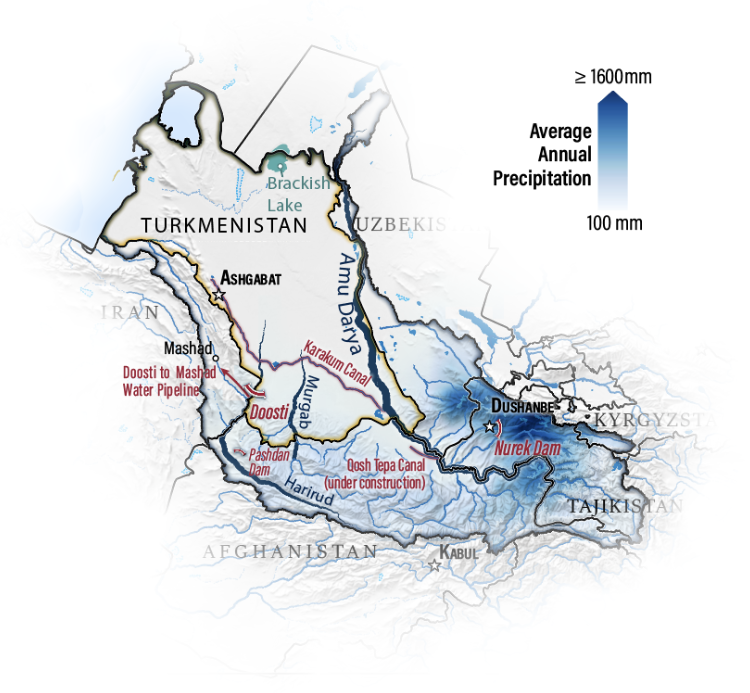
Turkmenistan’s agricultural industry has suffered declines in recent years due to a lack of water for irrigation and a devastating pattern of drought, heat, and floods. Irrigation-dependent farming uses 92% of the nation’s available supply.
Recent low levels in the shared Nurek Dam mean water resources are spread thin across Tajikistan, Uzbekistan, and Turkmenistan. Cotton and wheat yields have declined drastically over the last decade.
Moreover, both heat waves and flash floods are expected to increase in coming years. Damages from oversaturated wet seasons coupled with high temperatures in dry seasons make farming more and more difficult.
Agricultural employees compose 40% of Turkmenistan’s workforce. If those farmers migrate in search of more stable employment, Turkmenistan may see a rise in forced labor and a decline in overall agricultural productivity.
Decreased Oil and Gas Production
The oil and gas industry makes up 25% of Turkmenistan’s gross domestic product and 90% of all exports.
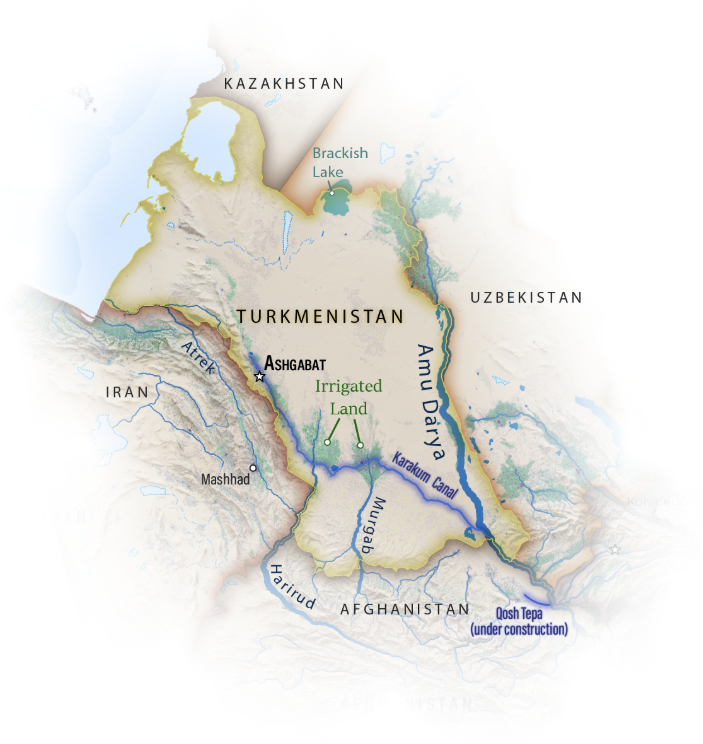
To increase the nation’s wealth, the government is looking to double its refinery capacity. But water is a necessary component in the heating, cooling, and washing processes of oil and gas production, and such an increase will require more reserves than the country has available.
Because irrigation uses 20 times more water than industry, supporting oil and gas expansion would limit both crop production and available jobs. Domestic supply may already be experiencing reductions, as major refinery cities are enduring water service cuts. Turkmenistan’s government must decide how to balance the daily needs of its people with the desire to expand and boost the economy.
Since its inception, GWSC’s analysis team has completed more than 100 briefs. Examples of other recent nations and regions the team has analyzed include Iran, Venezuela, Mexico, Tajikistan, Liberia, and many others. Find more information about GWSC’s work here.